Do You Need Approval for a 12-Foot Tall RV Carport? Your Permit Checklist


What You’ll Learn in This Guide
- A 12-foot RV carport often needs local approval, especially in Florida.
- Permit rules depend on your county, city, zoning, wind zone, HOA, and foundation type.
- Taller carports may need engineered drawings, wind-load details, and a site plan.
- HOA approval is separate from a city or county permit.
- ProBuilt Steel Buildings can provide customizable, Florida-certified steel buildings with free delivery and installation where available.
A 12-foot tall RV carport gives you the clearance you need for motorhomes, campers, trailers, and taller recreational vehicles. But before you install one, you need to know whether your local building department or HOA has to approve it.
In Florida, that answer depends on the property.
Some counties review carports based on height. Others focus on square footage, setbacks, wind-load requirements, anchoring, flood zones, or zoning use. For example, Hillsborough County lists carports under residential accessory structures larger than 150 square feet, and those projects have permit submittal requirements.
So yes, a 12-foot RV carport will often need approval. The smart move is to check before you order, not after the structure is already on your property.
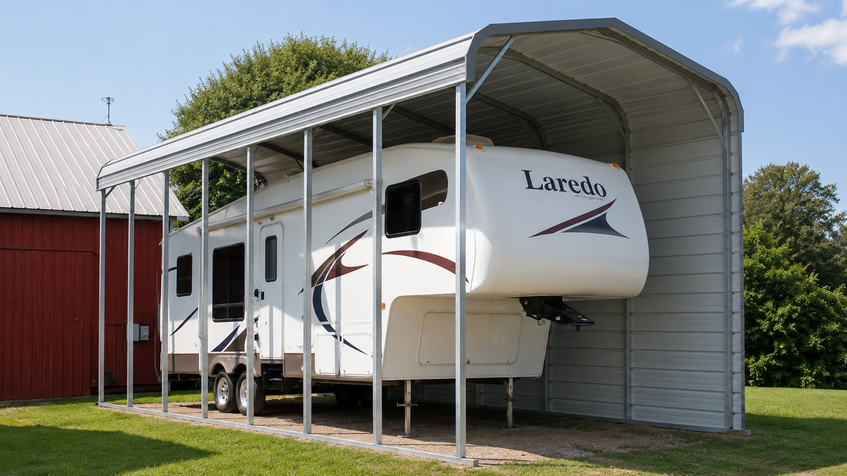
Why a 12-Foot RV Carport May Need Approval?
A 12-foot carport sits higher than a standard vehicle cover. That height helps with RV clearance, but it also gives your local building department more to review.
Wind exposure changes with height
A taller metal carport catches more wind than a lower structure. In Florida, wind matters because local code requirements can change by location, exposure, and coastal risk.
The Florida Building Code defines wind-borne debris regions in hurricane-prone areas, including areas within 1 mile of the coastal mean high-water line where the ultimate design wind speed is 130 mph or greater, and areas where the ultimate design wind speed is 140 mph or greater.
That doesn’t mean every RV carport in Florida follows one flat wind-speed number. Your local office decides what documentation is needed for your exact address.
Zoning rules may limit placement
A carport can meet structural requirements and still fail zoning review.
Your city or county may restrict how close the structure can sit to property lines, roads, sidewalks, drainage easements, septic areas, wells, or other buildings. Setbacks are one of the most common reasons buyers have to adjust their layout.
Measure first. Then confirm.
HOA rules can be stricter than county rules
If your property is in an HOA community, county approval may only be one step.
Your HOA may have rules for height, color, roof style, side panels, placement, visibility from the street, or matching the home’s exterior. Get written approval before scheduling installation.
Also read: RV Carports and RV Shelters: What RV Owners Should Know Before Buying
The Florida RV Carport Permit Checklist
Use this checklist before you install a 12-foot RV carport.
1. Call your county or city building department
Start with the local office that handles building permits.
Ask them directly:
- Does a 12-foot tall RV carport need a permit?
- Do you review by height, square footage, or both?
- Do you require a site plan?
- Do you require engineered drawings?
- Are there special wind-load or flood-zone rules for my address?
Some local offices have carport-specific permit steps. Others process carports under accessory structures.
2. Confirm the square footage
A 12-foot height is only part of the review.
A 12x20 RV carport and a 20x40 RV carport create very different roof areas. Larger structures may need more review because they add more wind uplift, more drainage impact, and more lot coverage.
Know the width, length, leg height, and roof style before calling.
3. Check setbacks and zoning
Your site plan needs to show where the carport will sit.
Most permit offices want to see distances from property lines, existing buildings, driveways, easements, and other site features. Miami-Dade’s zoning pre-permit review guidance says site plans should show the full property, property lines, existing and proposed buildings, dimensions, and setback distances.
Even a simple sketch can help you ask better questions.
4. Ask about wind-load documentation
Florida-certified buildings may need engineered documentation, especially in high-wind areas.
ProBuilt Steel Buildings, Florida metal buildings are engineer-certified to withstand wind loads of about 150 to 180 mph, depending on the structure and location.
Your local office may still ask for specific drawings or documents tied to your building and site.
5. Review anchoring and foundation rules
Anchoring matters.
Some areas may allow ground anchors. Others may require concrete, specific anchor systems, or engineered anchoring details. A 12-foot RV carport has more wind exposure, so don’t assume the same anchoring rules apply to every property.
Ask your building department what they require before installation.
6. Check HOA or deed restrictions
HOA approval can take time.
Send the HOA the size, height, color, roof style, side-panel plan, and proposed location. Keep the approval in writing.
A verbal “that should be fine” won’t help much if a board member changes or a neighbor files a complaint.
7. Verify installer and contractor requirements
Some permit offices require installer or contractor information before approving the project.
Ask whether the permit application needs license details, engineered drawings, product approvals, site plans, or inspection scheduling. Requirements vary by location, so get the checklist from your local office.
Florida RV Carport Permit Quick Reference
| Permit item | What to check | Why it matters |
|---|---|---|
| Height | Ask if 12 feet triggers review | Taller structures may face height and zoning limits |
| Square footage | Confirm total roof footprint | Larger structures can need more documentation |
| Site placement | Check setbacks and easements | Poor placement can delay approval |
| Wind load | Ask what rating applies to your address | Florida wind rules vary by location |
| Foundation | Confirm approved anchoring method | Ground and concrete anchoring may be treated differently |
| HOA approval | Get written approval if required | HOA rules are separate from county permits |
| Drawings | Ask if engineered plans are needed | Many offices need documents before review |
What Happens if You Skip the Permit?
Skipping the permit can turn a simple carport project into a headache.
Your county or city may require after-the-fact permitting, added inspections, corrections, relocation, or removal. Fines and fees can vary by local office.
Selling the property can also get harder. Unpermitted structures may come up during inspections, appraisals, or buyer due diligence.
Insurance is another concern. If the structure is damaged during a storm, an unpermitted or non-compliant installation may create problems during the claim process. Check with your insurer if you’re unsure.
Conclusion
A 12-foot RV carport is usually a project you should check with your local building department before installing.
Height matters, but it’s only one part of the review. Square footage, setbacks, wind-load requirements, anchoring, flood zones, and HOA rules can all affect approval.
ProBuilt Steel Buildings can help you design a durable, customizable RV carport using American-made steel, with Florida-certified options available where needed. Start with your local permit checklist, then request a free quote or use the 3D design option to plan a building that fits your RV and your property.
How ProBuilt Steel Buildings Helps With RV Carport Planning?
ProBuilt Steel Buildings builds customizable steel structures for carports, garages, RV covers, barns, utility buildings, commercial buildings, and other metal building needs.
For Florida buyers, ProBuilt’s Florida-certified steel buildings page lists made-in-USA steel, free delivery and installation, customization options, financing availability, and engineered wind-load ratings of about 150 to 180 mph depending on building and location.
That makes ProBuilt a strong fit for buyers who want a durable RV carport built around their vehicle size, property needs, and local weather concerns.
Before you order, gather your local permit notes. Then use ProBuilt’s 3D design tool and quote options to plan the building size, roof style, height, colors, side panels, and certification level.
For help choosing the right RV carport, call ProBuilt Steel Buildings at (877) 754-1818 today.
Frequently Asked Questions
Do I Need Approval for a 12-Foot Tall RV Carport?
Usually, yes. A 12-foot RV carport may need a permit, zoning review, HOA approval, or wind-load documents.
How Tall Can an RV Carport Be Without a Permit?
There’s no single Florida height limit. Your county or city may review height, square footage, setbacks, anchoring, or wind exposure.
Does My HOA Need to Approve My RV Carport?
Yes, if your property has HOA rules. HOA approval is separate from city or county approval.
Do I Need Engineered Drawings for a Metal RV Carport?
You may need them if your local office requires engineered plans. This is common for larger structures and high-wind areas.
What Wind Rating Is Required for a Florida RV Carport?
It depends on your exact location and local code. Florida wind-borne debris rules include certain coastal areas at 130 mph or greater and other hurricane-prone areas at 140 mph or greater.
Can ProBuilt Steel Buildings Help With a Florida-Certified RV Carport?
Yes. ProBuilt lists Florida-certified buildings, customization options, free delivery and installation, financing, and a 20-year warranty where applicable.


Kevin Gray
President - Probuilt Steel Buildings
Kevin Gray, originally from Live Oak, FL, grew up on a farm where he learned the value of hard work and integrity. After a career in banking, he turned to the steel industry to serve hardworking individuals like those he grew up with. Today, he simplifies the buying process while leading a team that prioritizes honesty, value, and exceptional customer service.


Still Have Questions About Your Metal Building?
Connect With Our Building Specialists Today!